
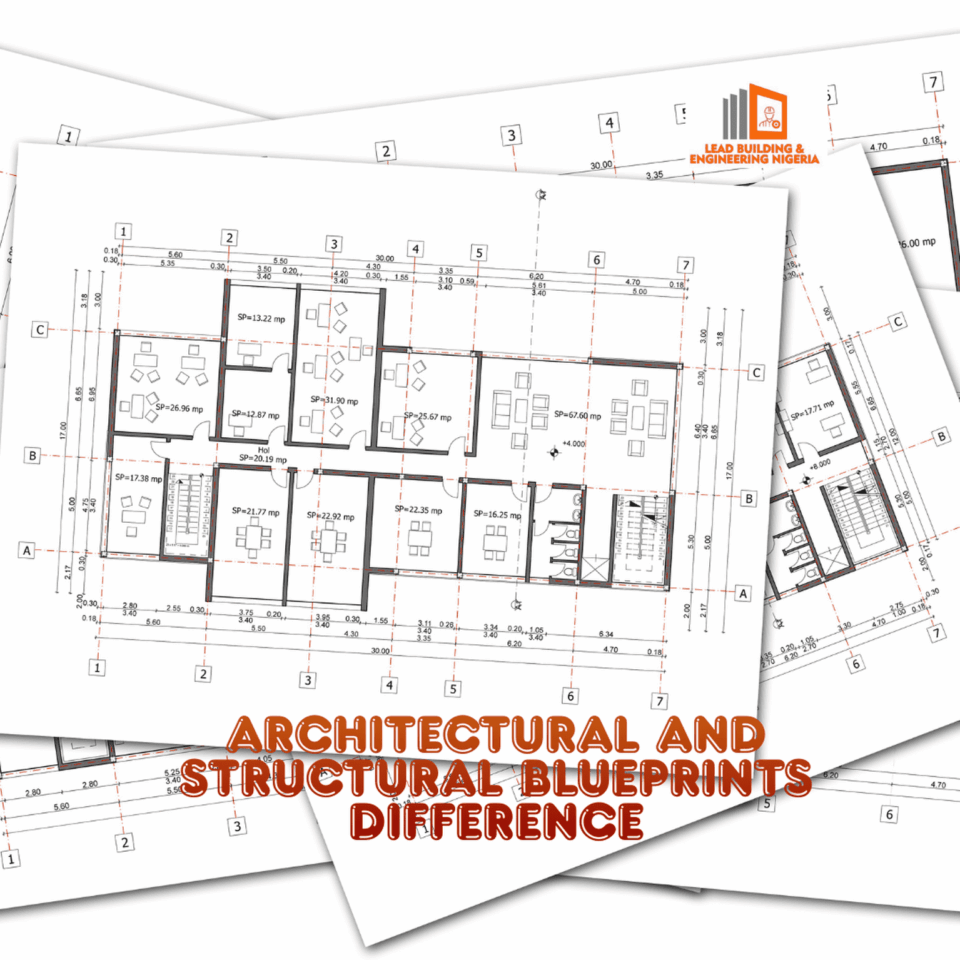
Understanding construction drawings is one of the most critical steps in any building project, whether residential, commercial, or industrial. Many project delays, budget overruns, and structural failures arise because clients and even some professionals do not fully understand the architectural and structural blueprints difference and how each set of drawings contributes to a successful build. While both blueprints work together toward the same goal, they serve very distinct purposes and are produced by different specialists. This article provides a clear, humanized explanation of their differences, responsibilities, and why both are indispensable in modern construction projects.
What Are Architectural Blueprints?
Architectural blueprints focus on the visual, functional, and spatial aspects of a building, and they form one half of the architectural and structural blueprints difference. These drawings are prepared by architects and communicate how a building will look, feel, and function. They typically include floor plans, elevations, sections, roof layouts, door and window schedules, and interior layouts. Architectural blueprints define room sizes, circulation paths, aesthetic elements, and compliance with planning regulations and building codes related to use and occupancy. In essence, they translate a client’s vision into a buildable design that contractors and other professionals can interpret.
Purpose of Architectural Blueprints
The primary purpose of architectural drawings is to ensure usability, comfort, and aesthetic coherence, which further clarifies the architectural and structural blueprints difference. These plans answer questions such as how people will move through the space, how natural light and ventilation are maximized, and how the building fits within its environment. Architectural blueprints also guide cost estimation for finishes, layouts, and fittings, helping clients visualize the final outcome long before construction begins. Without these drawings, a building may stand structurally but fail functionally or aesthetically.
What Are Structural Blueprints?
Structural blueprints address the engineering backbone of a building, representing the other side of the architectural and structural blueprints difference. Prepared by structural engineers, these drawings focus on load-bearing elements and how the building safely transfers loads to the ground. They include details of foundations, columns, beams, slabs, reinforcements, and connections. Structural blueprints ensure the building can withstand gravity loads, wind, seismic forces, and other environmental stresses. They are based on engineering calculations, material properties, and safety standards rather than visual appeal.
Purpose of Structural Blueprints
The role of structural drawings is to guarantee safety, stability, and durability, reinforcing the architectural and structural blueprints difference. These plans specify concrete grades, steel sizes, reinforcement spacing, and structural dimensions required to prevent collapse or excessive deformation. Structural blueprints are legally critical, as they are often reviewed and approved by regulatory authorities before construction can proceed. A beautifully designed structure without proper structural drawings poses serious safety risks and long-term liabilities.
Key Differences Between Architectural and Structural Blueprints
The architectural and structural blueprints difference becomes clearer when comparing their focus areas. Architectural drawings prioritize form, function, and aesthetics, while structural drawings prioritize strength, safety, and load resistance. Architects concentrate on spaces people see and use, whereas structural engineers concentrate on elements people rarely notice but depend on for safety. Another major difference lies in scale and detail: architectural plans show room layouts and finishes, while structural plans show reinforcement details, structural sections, and engineering notes. Both sets of drawings must align perfectly to avoid conflicts during construction.
How Architectural and Structural Blueprints Work Together
Despite the architectural and structural blueprints difference, neither set of drawings can function in isolation. Architectural designs often influence structural decisions, such as large open spaces requiring special beam designs or cantilevered elements needing advanced engineering solutions. Conversely, structural limitations may require architects to adjust layouts or materials. Effective collaboration between architects and structural engineers ensures that the building is both visually appealing and structurally sound. This coordination is especially important in complex projects where design innovation pushes engineering boundaries.
Common Misconceptions Clients Have
Many clients assume that architectural drawings alone are sufficient, underestimating the architectural and structural blueprints difference. Others believe structural drawings are merely technical formalities, not realizing they directly affect safety and cost. Another misconception is that one professional can fully replace the other, which is rarely true for compliant and durable construction. Educating clients early helps them make informed decisions, allocate proper budgets, and avoid costly redesigns or site errors.
The Role of Technology and AI in Blueprint Development
Modern tools, including Building Information Modeling (BIM) and AI-driven design software, are reshaping the architectural and structural blueprints difference by improving collaboration and accuracy. AI can analyze design options, predict structural performance, and detect clashes between architectural and structural elements before construction begins. This raises an important question: as AI technology becomes more advanced, will it eventually bridge the gap between architectural creativity and structural engineering precision into a single intelligent workflow? While AI enhances efficiency, human expertise remains essential for judgment, creativity, and accountability.
Why Understanding the Difference Matters
A clear grasp of the architectural and structural blueprints difference empowers clients to communicate better with professionals and make smarter project decisions. It helps in evaluating proposals, understanding timelines, and appreciating why certain design changes impact cost or safety. For developers and property owners, this knowledge reduces risk and increases confidence throughout the construction lifecycle. Ultimately, informed clients contribute to smoother projects and higher-quality outcomes.
Conclusion
The architectural and structural blueprints difference lies in their distinct but complementary roles: architectural blueprints define how a building looks and functions, while structural blueprints ensure it stands safely and endures over time. Both are essential, interconnected, and non-negotiable for successful construction. Clients planning any building project should work with experienced professionals who understand how to integrate design vision with engineering integrity. For reliable guidance, precise drawings, and end-to-end building solutions, clients should reach out to Lead Building and Engineering to ensure their projects are executed with clarity, safety, and excellence.
